
Powder Coating + E-Coating Combined for Maximum Corrosion Protection
E-Coat Primer Combined with a Durable Powder Topcoat
Some parts need more than a single protective finish. For components exposed to moisture, salt, chemicals, abrasion, UV exposure, and demanding outdoor or industrial conditions, combining E-coating and powder coating provides a high-performance coating system built for long-term durability.
Winona Powder Coating applies a corrosion-resistant epoxy E-coat primer first, then adds a durable powder-coated topcoat. The result is thorough coverage across the entire part, including difficult-to-reach areas, plus the exterior durability, color options, and appearance benefits of powder coating.
It’s a careful two-step process that delivers two levels of protection, an ideal choice for manufacturers that need enhanced coating reliability in harsh environments or tough operational conditions, especially where complex part geometry, corrosion resistance, and long service life are critical.
How Our E-Coat + Powder Coat Process Works
The combined process begins with proper cleaning and pretreatment to prepare the metal surface for strong coating adhesion. Parts are then immersed in an electrically charged E-coat bath, where the epoxy coating is deposited uniformly across the conductive metal surface.
Your parts get the best of both worlds in terms of coverage and protection:
- Unlike spray-applied coatings, E-coat is especially effective at reaching recessed areas, edges, cavities, tight corners, and other difficult-to-access features.
- The E-coat primer thus creates a consistent corrosion-resistant foundation before the powder-coated topcoat is applied and cured.
- The powder coating adds a thicker, highly durable outer layer that can be selected to meet your requirements for color, gloss, texture, chemical resistance, UV exposure, weathering, and overall appearance.
Together, the two coatings create a layered system designed to protect the metal substrate from the outside in. If the powder topcoat chips or wears over time, E-coating gives the metal surface a secondary shield against corrosion.
.png?width=2000&height=1125&name=Untitled%20design%20(10).png "Untitled design (10)")
Why Combine E-Coat and Powder Coating?
Each process has distinct advantages. E-coating provides highly uniform coverage and excellent corrosion protection, while powder coating delivers a durable, attractive exterior finish with broad options for color, texture, and performance.
When used together, they help address the limitations of relying on one coating process alone.
Complete Coverage for Complex Parts
E-coat is an immersion process that uses electrical current to draw coating material to the part surface. This process helps create a thin, even primer layer across complex geometries, including areas that may be difficult to coat consistently with a spray-applied finish.
For parts with tight spaces, recessed areas, internal features, sharp edges, or intricate shapes, E-coat helps ensure the underlying metal receives dependable corrosion protection before powder coating begins.
Learn more in our related article: The Science Behind E-Coating – How the Process Protects and Preserves Your Parts
Protection When the Topcoat Is Damaged
Powder coating provides excellent resistance to impact, wear, chipping, scratching, moisture, and environmental exposure. However, parts used in abrasive or high-impact conditions will often inevitably experience damage no matter how durable the topcoat.
When a powder coat is chipped by gravel, tools, frequent handling, abrasion, or other harsh conditions, the E-coat primer remains underneath to help protect the exposed metal from rust and chemical corrosion. It’s an added layer of protection that can be especially valuable for parts used outdoors, in transportation equipment, on worksites, or in industrial environments.
Stronger Corrosion Resistance
E-coat is the ideal corrosion-resistant primer because it provides consistent coverage across the metal substrate. Powder coating then adds a durable barrier against moisture, UV exposure, chemicals, abrasion, and general wear.
The combined system helps protect against corrosion caused by:
- Rain, snow, humidity, and standing moisture
- Road salt, marine salt spray, and de-icing chemicals
- Chemical exposure and industrial contaminants
- Mud, gravel, dirt, and abrasive jobsite conditions
- Outdoor weathering and UV exposure
- Frequent handling, impact, and mechanical wear
For especially demanding applications, an E-coat primer and powder-coated topcoat can provide a substantially more robust defense than a standalone finish.
Better Appearance and Finish Flexibility
E-coat delivers a smooth, uniform primer layer, but powder coating provides more flexibility for visible finish requirements. Manufacturers can select powder coatings in a wide range of colors, gloss levels, textures, and performance formulations.
This allows you to pair the corrosion resistance and coverage advantages of E-coat with a powder-coated finish that meets your product’s appearance, branding, exterior durability, or specification requirements.
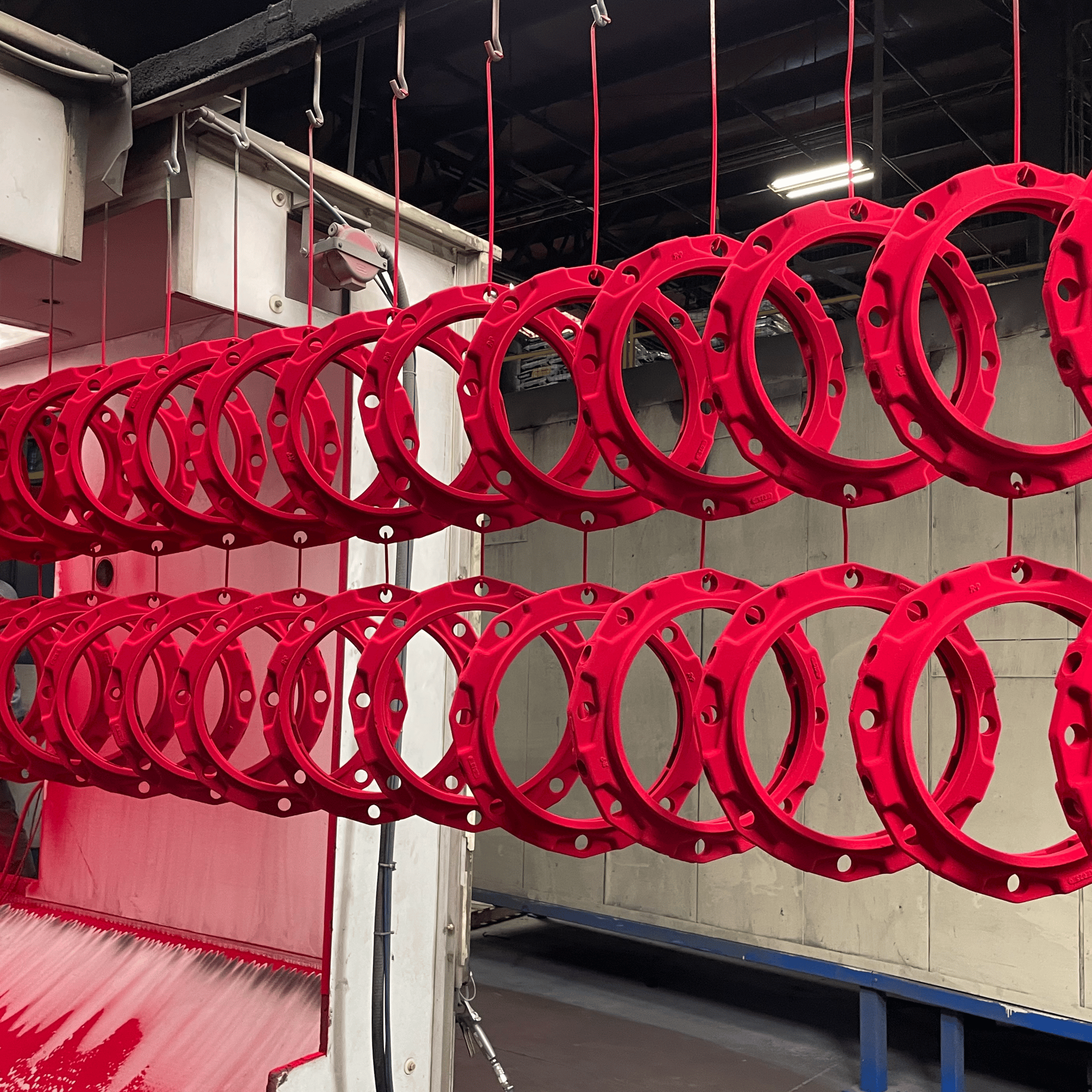
Complete Coating Capabilities Under One Roof
Many manufacturers have to deal with coordinating separate suppliers for primer and topcoat applications. That leads to logistical headaches, with conflicts in transportation, handling, scheduling, while also creating opportunities for damaged parts or delays every time your parts are passed off.
Winona is one of the few regional finishing providers that offers both epoxy E-coating and powder coating under one roof. Our integrated capabilities help simplify the finishing process while giving customers access to a coating system tailored to their performance requirements.
Winona’s E-coat line includes a 13-stage pretreatment process with zinc phosphate, laser scale removal, RO water, and automated process controls. After E-coating, parts can move into our powder coating operation for a durable topcoat selected around the product’s intended environment and finish requirements.
The Big Applications That Benefit from E-Coat Primer + Powder Topcoat
Combined powder and e-coating gives you enhanced coating durability and corrosion resistance no matter the application. That can include chemical protection, long-term weather resistance, or added protection against coating damage in handling or service.
We regularly apply combined powder / E-coating for programs across a range of industries and product categories:
- Agricultural equipment and components
- Automotive, RV, and trailers
- Construction equipment and jobsite products
- Work truck components and accessories
- Heavy equipment and industrial machinery
- Outdoor furniture, fixtures, enclosures, and architectural work
- Marine and boating equipment
- Industrial HVAC, utility, and infrastructure components
- Metal fabricators, stampers, foundries and casting manufacturers, machine shops, and assembly operations
- Government, municipal, military, and defense-related equipment
Of course, the best coating system depends on the material, part geometry, intended environment, corrosion exposure, required appearance, production volume, and applicable performance specifications. Winona works with manufacturers to evaluate those requirements and identify the right pretreatment, primer, and topcoat combination for the job.
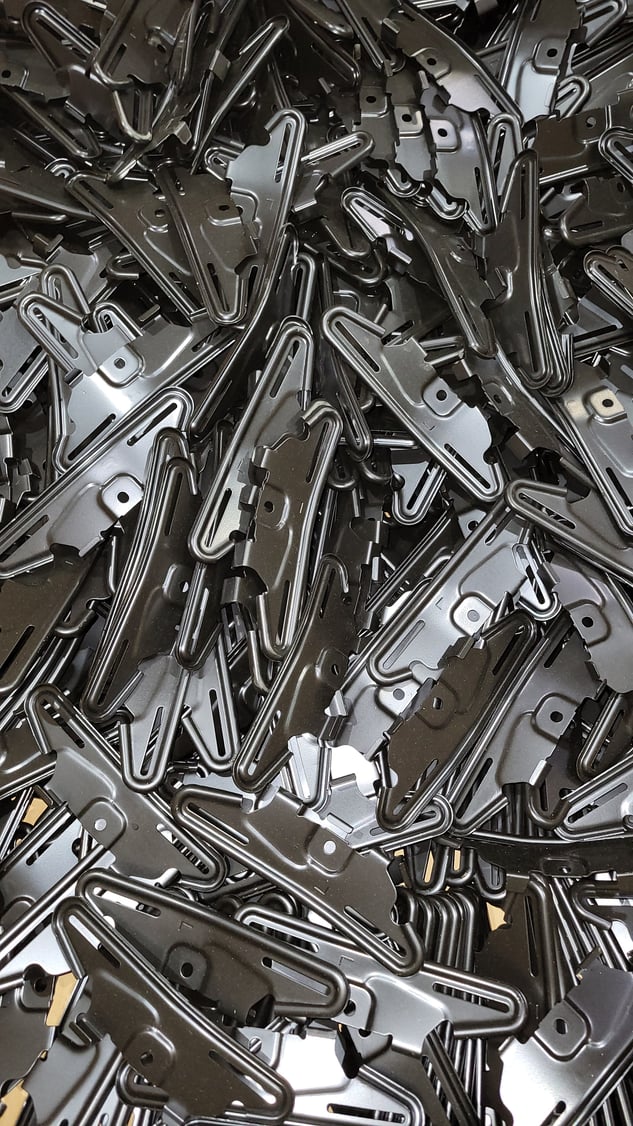
The Winona Advantage for Combined Powder / E-Coating:
Fully Integrated E-Coat and Powder Coat Processes
Winona has the equipment and in-house process knowledge to apply E-coat primer and powder-coated topcoat systems without requiring customers to manage multiple finishing vendors. This helps reduce coordination challenges and supports a more streamlined production program.
Consistent Coverage Where It Matters
The immersion-based E-coat process is particularly valuable for conductive metal parts with complex shapes, tight spaces, cavities, and recessed features. It helps establish a uniform protective foundation before the powder topcoat is applied.
Durable Topcoats for Demanding Conditions
Powder coating provides the exterior durability many industrial and commercial parts require. With options for color, gloss, texture, UV resistance, chemical resistance, and wear performance, the topcoat can be selected to support both functional and appearance requirements.
High-Volume Capacity for Production Programs
Winona supports a wide range of manufacturing needs, from recurring high-volume programs to specialty runs, oversized components, and parts that require a more hands-on finishing approach. Our Northern Indiana facilities provide more than 217,000 square feet of combined production space, with automated and manual capabilities to fit the needs of the program.
Quality-Focused Finishing Support
A durable coating starts well before the final cure cycle. Winona’s process includes meticulous pretreatment, controlled application, curing, packaging, and delivery support to help finished parts arrive ready for the next stage of production.
Frequently Asked Questions About E-Coat Primer + Powder Coating
Answers to common questions about combining E-coating and powder coating for enhanced corrosion protection and durable metal finishing.
What is an E-coat primer with a powder-coated topcoat?
It is a two-layer coating system in which epoxy E-coat is applied first as a corrosion-resistant primer, followed by a powder-coated topcoat. E-coat provides thorough, uniform coverage, while powder coating adds exterior durability, color, texture, and UV resistance.
Why use E-coat and powder coating together?
Combining the processes provides the advantages of both. E-coat helps protect complex surfaces, recessed areas, and hard-to-reach features from corrosion, while powder coating provides a durable outer finish that resists wear, weathering, chemicals, and UV exposure.
Does the E-coat still protect the part if the powder coating chips?
Yes. If the powder topcoat is damaged by abrasion, impact, gravel, or harsh service conditions, the E-coat primer remains beneath it to help protect the metal substrate from rust and chemical corrosion.
What types of parts benefit most from this combined coating system?
The process is especially valuable for metal parts exposed to salt, moisture, chemicals, outdoor weather, abrasion, or frequent handling. It is also a strong choice for complex parts with cavities, recesses, edges, and other difficult-to-coat areas.
Can E-coat and powder coating be applied to steel, aluminum, and cast iron?
Certainly. These processes are commonly used on conductive metal components, including steel, aluminum, cast iron, and other compatible substrates. The right process depends on the specific material, part geometry, size, and performance requirements.
Does the powder topcoat offer color and texture options?
Yes. Powder coating is available in a wide range of colors, gloss levels, textures, and performance formulations. It can be selected to meet decorative, branding, weathering, chemical-resistance, or functional requirements.
Can Winona handle both coating processes for the same part?
Yes. Winona provides both E-coating and powder coating in-house, allowing customers to use an E-coat primer and powder-coated topcoat system without coordinating separate finishing suppliers.
How do I know if an E-coat primer and powder topcoat are right for my project?
The ideal coating depends on the part material, geometry, exposure conditions, corrosion risk, expected wear, appearance requirements, and applicable specifications. Share those details with Winona early in the quoting process so our team can recommend the most effective finishing approach..
Contact Winona About Combined E-Coat + Powder Coating
When your parts need more than a standard finish, an E-coat primer with a powder-coated topcoat provides complete coverage combined with enhanced corrosion resistance, giving your parts maximum exterior durability.
Winona offers both E-coating and powder coating under one roof as separate or combined processes. Our team is happy to review your part material, geometry, exposure conditions, appearance requirements, and production needs to determine whether a combined coating system is the right fit.